Ketamine-Assisted Psychotherapy
Ketamine-Assisted Psychotherapy (KAP) offers a new pathway for people who feel stuck or disconnected in traditional therapy. By combining low-dose ketamine with the structure and support of a trusted therapeutic relationship, clients can access deeper insight, emotional release, and new perspectives. This approach is grounded in safety, clinical collaboration, and integration that can help you make meaningful and lasting changes from within.
KAP involves a sublingual lozenge taken in session within a safe therapeutic setting. The medicine provides a “timeout” from the ordinary mind and temporarily enhances the brain’s capacity for change, creating a window of increased neuroplasticity. Within that window, clients are often able to access new perspectives, loosen old patterns, and engage more deeply in the therapeutic process.
How KAP Can Support Therapy:
Enhanced neuroplasticity and learning: Ketamine increases the release of BDNF (brain-derived neurotrophic factor), often called “brain fertilizer.” This supports the growth of new neural connections, making the brain more open to learning and change.
Disruption of negative cycles: By calming the brain’s default mode network (the part tied to self-criticism and rumination), ketamine can reduce overactive, repetitive thinking.
Reduction of fear and avoidance: Ketamine may interrupt fear responses and make it easier to face avoided or painful material with less overwhelm.
Psychological and relational shifts: Clients often describe feeling more open, connected, and able to experience trust and pleasure in relationships.
Changes in self-perception: KAP may bring shifts in identity, mood, and motivation, helping clients connect with new possibilities for action and growth.
Am I a Good Fit for KAP?
KAP may be a good option if you’re seeking change, feeling stuck in therapy, or wanting to go deeper in your healing. Many people find that ketamine helps them relax, break through barriers, or open to new ways of experiencing themselves and their relationships.
To participate in KAP, you must be 18 or older and complete a medical evaluation. This work is most effective when there’s already a strong therapeutic relationship. If we’ve had some sessions together and feel like a good fit, KAP can open the door to going even deeper.
If you’re curious about whether KAP might be right for you, please reach out for a consultation to learn more.
My Focus Areas:
In my practice I offer ketamine-assisted psychotherapy for:
Body-focused repetitive behaviors (hair pulling, skin picking)
Depression
Anxiety
PTSD
While ketamine is being studied for other conditions, my focus is on supporting clients with these particular concerns.
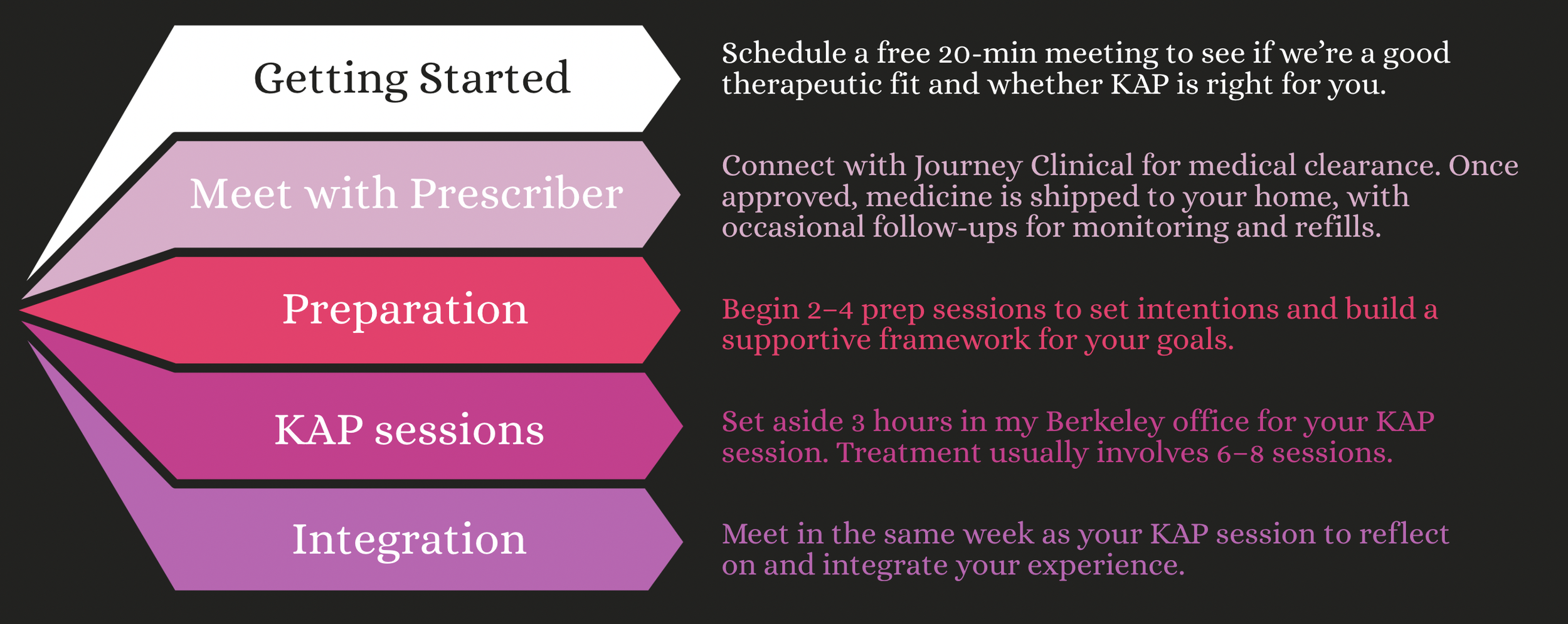
The Process: